Air Quality Planning and Science Division

2023 Consumer and Commercial Products Survey

The California Air Resources Board's 2023 Consumer and Commercial Products Survey is an important step in collecting information on consumer products that are sold or supplied for use in California.


The California Air Resources Board's (CARB’s) 2023 Consumer and Commercial Products Survey (2023 Survey) launched on December 3, 2024. For ease of reporting the 2023 Survey, an interactive electronic reporting is available for Responsible Parties. All reported data will be treated as confidential. The 2023 Survey documents, as well as CPRT and survey instructions, are available to view and download at the links below.


2023 Survey Categories

  • The list of product categories for the 2023 Survey.

Webinars & Materials

  • 2023 Survey webinar information and related materials.

Consumer Products Reporting Tool

  • Download the latest version of the 2023 Survey Consumer Products Reporting Tool (CPRT). View instructions for reporting and other resources.

Responding Companies List - Coming Soon

  • The 2023 Survey extended reporting deadline of September 22, 2025, has expired.

  • A list of 2023 Survey participating companies will be posted upon completion of the QA/QC of all submittals.


Background

CARB’s Consumer Products Program is a key part of overall efforts to reduce the amount of smog-forming volatile organic compounds, toxic air contaminants, and greenhouse gases that are emitted from the use of chemically formulated consumer products in California. CARB’s Consumer Products Regulations have resulted in reduced statewide emissions from consumer products by an estimated 50 percent since 1990, relative to uncontrolled levels. CARB’s 2023 Survey is an important step in collecting information on consumer products that are sold or supplied for use in California.


If you have any questions about the material posted or have general questions regarding the Consumer Products Program, please contact Moslem Hossein Mardi or the 2023 Consumer Products Survey Help Box.


Consumer Products Program - Consumer & Commercial Products Surveys

Hero Image
Case Settlement
Off
Legislative Bill Tracking
Off
Division field is automatically filled by OIS on 06/21/2021
Off

Subscribe to the Coatings Program Bulletin

To stay up to date on the most recent Coatings Program activity click Subscribe, enter your email address or phone number, and navigate to the "Coatings" heading.

Once there, select "Architectural Coatings" from the options available.

SUBSCRIBE

Be sure to browse the other bulletin topics and select any others that might be of interest.


Coatings Program

Contact
Case Settlement
Off
Legislative Bill Tracking
Off
Division field is automatically filled by OIS on 06/21/2021
Off
Past Coatings Activity

The Coatings Program has also developed airborne toxic control measures to reduce the public health impacts from toxics in coatings.


Automotive Refinishing

  • The Automotive Refinishing Program is dedicated to reducing or eliminating toxins from paints or coatings used in commercial automotive refinishing operations and residential use.

Thermal Spraying

  • Thermal spraying is a process in which metals are melted and sprayed on a surface to form a coating.


Contact
Case Settlement
Off
Legislative Bill Tracking
Off
Division field is automatically filled by OIS on 06/21/2021
Off

Previous Methodologies and Suggested Process

Subscribe for Consumer Products Updates. If you are subscribed to the consumer products topic, you will receive information updates on the activities of the Consumer Products Fee Regulation Workgroup.


Consumer Products Program - Fee Regulation Activity

Case Settlement
Off
Legislative Bill Tracking
Off
Division field is automatically filled by OIS on 06/21/2021
Off
Public Workshop for the 9 µg/m3 Fine Particulate Matter National Ambient Air Quality Standard: Designations
Location
Zoom and CalEPA Headquarters Building, Sierra Hearing Room (second floor), 1001 I Street, Sacramento, CA 95814
Start Date
End Date

SIPs for the 9 µg/m3 PM2.5 Standard

Introduction

The Clean Air Act (Act) requires the U.S. Environmental Protection Agency (U.S. EPA) to set health-based national ambient air quality standards (NAAQS or standards) for numerous pollutants, including fine particulate matter (PM2.5). On February 7, 2024, U.S. EPA strengthened the annual PM2.5 standard from 12.0 micrograms per cubic meter (µg/m3) to 9.0 μg/m3, based on an integrated assessment of an extensive body of new scientific evidence, which improved the body of knowledge regarding PM2.5-related health effects.

Designations: Public Hearing on January 23, 2025

The first step in addressing the 9 μg/m3 standard is designating regions of the State as either attaining or not attaining the new standard. On December 13, 2024, CARB published a Public Notice announcing that CARB will hold a public hearing on January 23, 2025, to consider staff recommendations for designations and nonattainment area boundaries. Staff are recommending nine nonattainment areas for the 9 μg/m3 standard, as detailed in the Staff Report. The areas are as follows: portion of Plumas County, portion of Mendocino County, portion of Feather River Air Quality Management District, San Francisco Bay Area Air Basin, Sacramento County, San Joaquin Valley Air Basin, South Coast Air Basin, San Diego County, and portion of Imperial County.

For more information on designations, please see CARB’s designations page.

Workshops

Workshop #2: December 5, 2024

CARB held a public workshop on the evening of Thursday, December 5, 2024, related to nonattainment designation recommendations and planning efforts for the 9 μg/m3 PM2.5 standard. CARB staff discussed each nonattainment area recommendation along with proposed emission inventory improvements for the future SIPs. Materials from this workshop are available below.

Workshop #1: September 25, 2024

CARB previously held a public workshop on the evening of Wednesday, September 25, 2024, to kick off the SIP planning efforts for the 9 µg/m3 PM2.5 standard. The workshop was the first in a series exploring various aspects of planning for the 9 µg/m3 PM2.5 standard which the State is required to undertake pursuant to the Act. Materials from this workshop are available below.

Resources

For more information, please see the below links to CARB- and U.S. EPA-created resources on PM2.5 and the 9 ug/m3 PM2.5 standard.

Case Settlement
Off
Legislative Bill Tracking
Off
Division field is automatically filled by OIS on 06/21/2021
Off

Fragrance Use in Consumer Products

Background

Consumer products include chemically formulated products used by both household and commercial users, spanning a variety of categories such as cleaners/degreasers, lubricants, disinfectants, fabric softener-single use dryer products (dryer sheets), air fresheners, and various personal care items. Since 1989, the California Air Resources Board (CARB) has been mandated by the California Clean Air Act to regulate the volatile organic compounds (VOC) found in consumer products as part of its ground-level ozone reduction strategy. This regulatory initiative has led to the adoption of VOC content standards for over 100 categories of consumer products, resulting in a significant reduction of VOC emissions by 50% relative to uncontrolled levels. 


Composition of Consumer Products

Consumer products are composed of various functional ingredients, including solvents, propellants, functional components, fragrance, and additives. CARB classifies each ingredient chemical into distinct categories such as VOC, low vapor pressure-VOCs (LVP-VOC), exempts, and inorganic compounds. Fragrance ingredients, which are typically VOC and LVP-VOC chemicals, are used solely to give a product odor or scent or to mask undesirable odors in product formulations. Fragrances can range from simple synthesized chemical compounds to complex mixtures derived from natural sources such as flowers, grasses, spices, fruits, wood, leaves, and animal secretions like musk and ambergris.


Use of Fragrance in Consumer Products

Fragrance ingredients are common in consumer products and present across nearly every product category. Manufacturers typically add fragrance to offset undesirable odors from base ingredients or to enhance the overall scent of the product. Due to its cost, fragrance is often added sparingly to product formulations, with only enough added to achieve the desired effect on a user’s sense of smell. 


Health Effects of Fragrance Exposure

Exposure to fragrance compounds in consumer products has been associated with health issues, including migraine headaches and respiratory difficulties, as reported by over 34% of surveyed respondents in the United States (Steinemann, 2016). Fragrance chemicals can lead to acute or chronic health effects. Studies indicate they are present in household dust, thereby posing a risk of secondary exposure through inhalation or ingestion, and are of particular concern for young children. Multiple chemical sensitivity, characterized by a range of acute and chronic symptoms, has been linked to exposure to fragrance chemicals in consumer products.


CARB's Efforts to Reduce Fragrance Emissions

Over the past three decades, CARB has set VOC limits for numerous consumer product categories resulting in reduced fragrance use. For example, VOC limits on cleaning products capped the amount of monoterpenes (which have fragrance as well as solvency properties) in those products. Notably, the Two Percent Fragrance Exemption, which excluded up to two percent of fragrance from VOC content calculations, has also been eliminated for specified product categories. This regulatory change promotes transparency for fragrance ingredients, aligning with the California Fragrance and Flavor Right to Know Act (Senate Bill 574, 2019), which mandates disclosure of toxic fragrance ingredients in cosmetic products. 

Prior to eliminating the Two Percent Fragrance Exemption, fragrance VOC up to a combined level of two percent of the net weight of any consumer product was excluded from the calculation of the VOC content of a product. Fragrance formulation was often not disclosed to manufacturers, so all fragrance was considered VOC. By removing this exemption, fragrance formulators have an incentive to provide consumer product manufacturers with the VOC content of their fragrances resulting in greater transparency about product formulations. The Consumer Products Regulation also provided an exemption for air fresheners that were comprised entirely of fragrance and non-VOCs, and for fragrances that are used in “personal fragrance products.” In 2021, CARB approved amendments to the regulation that sunset these preferential treatments of fragrance ingredients in some consumer product categories including single use fabric softener dryer sheets. 

CARB also set new and lower VOC limits in 2021 for personal fragrance products (perfumes/colognes) and several types of “air freshener” products including automatic aerosol air fresheners, manual aerosol air fresheners, concentrated aerosol air fresheners, and total release aerosol air freshener products.


Federal Food and Drug Omnibus Reform Act of 2022

In addition to CARB's initiatives, the Food and Drug Omnibus Reform Act of 2022 (FDORA) introduces significant updates to the regulatory framework for cosmetics in the United States. Under FDORA, the Modernization of Cosmetics Regulation Act of 2022 (MoCRA) mandates various requirements for cosmetic companies, including ingredient disclosure, adverse event reporting, and adherence to good manufacturing practices. MoCRA's emphasis on identifying allergens, particularly in fragrance, aligns with FDORA's overarching goal of enhancing product oversight and safeguarding consumer health. 

State and federal regulatory actions aim to increase transparency on fragrance use in consumer products while also enhancing safety standards and protecting public health. 


Hero Image
Case Settlement
Off
Legislative Bill Tracking
Off
Division field is automatically filled by OIS on 06/21/2021
Off

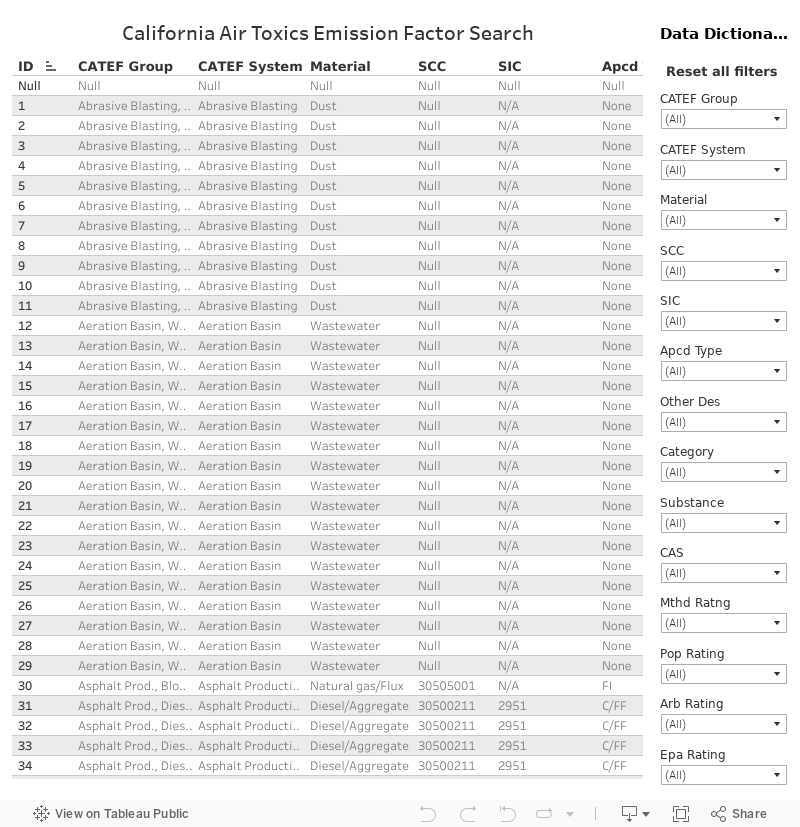
CATEF Search

Contact
Case Settlement
Off
Legislative Bill Tracking
Off
Division field is automatically filled by OIS on 06/21/2021
Off