Clean Transportation Equity Incentives Symposium
CARB’s annual Lessons Learned Symposium brings together program administrators, outreach partners, community groups, and key stakeholders to reflect on and provide transparency into CARB's suite of equity-focused clean transportation incentives.
Purpose of the Clean Transportation Equity Incentives Symposium
CARB's suite of clean transportation incentive projects has grown substantially over the last decade. Beginning with the Clean Vehicle Rebate Project, now the portfolio includes 10 individual and shared mobility incentive projects and supporting projects that serve Californians. The goal of the Symposium is to accelerate and center equity in clean transportation by creating a space for networking and information-sharing from organizations and individuals with a vested interest in equity. The Symposium is held in a different location in California each spring.
Important Dates & Information
2026 Symposium:
- Date and time: May 5, 2026, 9:00 am to 5:00 pm
- Location: Holiday Inn Sacramento Downtown, 300 J St, Sacramento, CA 95814
- Registration and more information
Contact Kathryn.Canepa@arb.ca.gov if you’d like to suggest a topic for the 2026 Symposium.
Highlights from the Latest Symposium
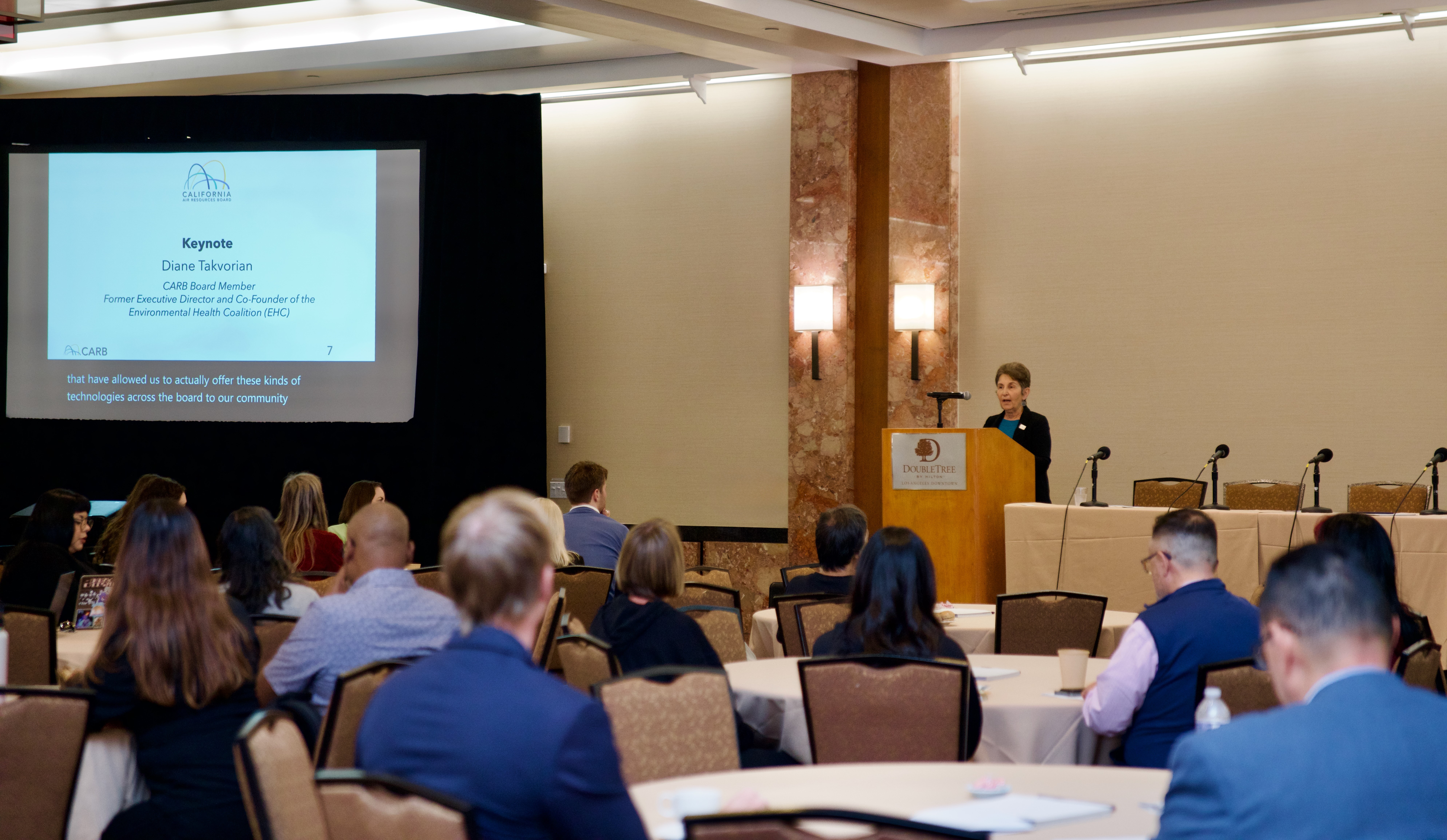
On April 12, 2025, CARB hosted the 3rd annual Clean Transportation Equity Incentives Symposium. The event was held at the Hilton Doubletree in Downtown Los Angeles and brought together over 300 guests, including approximately 200 who attended in person. Attendees represented over 130 organizations, including: community leaders; nonprofit partners; local, regional, and state government; tribal government leaders; industry representatives; and community members. The Symposium provided an opportunity for interested parties to network, build relationships, and share knowledge across projects, while also engage in important discussions on challenges and shared lessons learned.
The essential outcomes of the Symposium were the perspectives and insights provided by the attendees, particularly those that represent communities across the state. CARB staff reviewed and reflected on this feedback and will use it to inform decision-making on project design and implementation, as well as the design of the Symposium itself moving forward. Some of the most important takeaways included:
- Public/private partnerships, as well as more cross-agency collaborations within the state, are essential to effectively implement projects;
- Flexible timelines, guidelines, and funding are needed to best support community-based projects and create inclusive grant funding programs, including:
- Tailored scopes of work and clear guidance are crucial especially when working with under-resourced communities and organizations;
- Smaller community-based organizations have difficulty with extensive reporting and insurance requirements and may require flexibility and creativity to find solutions that help all parties conduct their work effectively; and
- Tribes experience challenges with certain State requirements such as the waiver of sovereign immunity required for most grants.
- Program outreach must be tailored to the unique barriers and challenges faced by groups such as low-income families, people who are elderly, individuals for whom English is their second language, and BIPOC (Black, Indigenous, and People of Color) communities. Broken trust with government because of institutional harms means special attention must be paid to building trust and establishing accountability through clear and culturally competent communication, consistency, and ongoing efforts to tailor programs to meet the specific needs of priority communities.
Resources
Recordings from the 2025 Symposium are available at 2025 Clean Transportation Equity Incentives Symposium.
Prior Symposia
- 2025 – Los Angeles
- 2024 – Sacramento
- 2023 – Oakland