Clean mobility solutions discussed at forum powered by Cap-and-Invest
October 24, 2025 – Providing clean transportation alternatives in overburdened communities is a priority for the California Air Resources Board (CARB) and other state agencies as California works toward a future with fewer vehicles powered by fossil fuels. The state wants to ensure no one gets left behind in the transition.
That’s why program implementers, policymakers, and academics discussed ways to work together to increase clean transportation options during the Clean Mobility Forum 2025 in downtown Fresno on October 2nd.
The forum was organized by the Clean Mobility Equity Alliance (CMEA), a peer learning, knowledge sharing network that convenes clean mobility project implementers and partners, helping build collective capacity. CMEA members include grantees from four CARB programs that help deliver clean mobility programs, using proceeds from Cap-and-Invest, the carbon trading program formerly known as Cap-and-Trade. Governor Gavin Newsom recently signed legislation reauthorizing Cap-and-Invest through 2045.
During the third annual forum, Bill Magavern of the Coalition for Clean Air said the extension of Cap-and-Invest was the most important development for clean mobility programs during the recent legislative session.
CMEA supports clean mobility grantees from CARB’s mobility projects, such as Clean Mobility Options (CMO), the Sustainable Transportation Equity Project (STEP), Clean Mobility in Schools (CMIS), and Planning and Capacity Building (PCB). Those programs have received more than $200 million from Cap-and-Invest since the start of the carbon trading program.
About 150 forum participants heard speeches and participated in breakout sessions under the theme “Bridging Systems, Centering Equity: Advancing Clean Mobility Through Practice and Partnership.” Participants discussed the importance of building trust between government agencies and overburdened communities to overcome historical injustices and failures.
They offered suggestions for bridging the divide.
Mike Blockstein of Public Matters, a Los Angeles-based “creative studio for civic engagement,” said he tries to find ways of making the engagement process fun. He was once hired by LA Metro to get public input about a public transportation project in East LA. He said the community has “engagement fatigue” from repeated government surveys.
His solution was to play on the strong sense of community pride in East LA. He turned the survey into a game called “East LA IQ” that called for participants to show their knowledge of the community – and explain their preferences for the LA Metro project in the process.
“It is about understanding you are a guest in the community and building trust,” said Blockstein, a point repeated by other forum participants in the forum.
Dean Wilson, the City of Fresno’s Planning Manager, echoed that thought, saying a history of practices by the city has alienated Fresno’s overburdened communities.
“The city had a lot of horrible practices, like redlining,” said Wilson, referring to a policy of preventing minorities from living in certain communities. “You have to have creative ways of bringing people to the table, reach out and engage them.”
One way Wilson does this is to take public transportation everywhere he needs to go one day a month. He talks to people on the bus and learns about what they need.
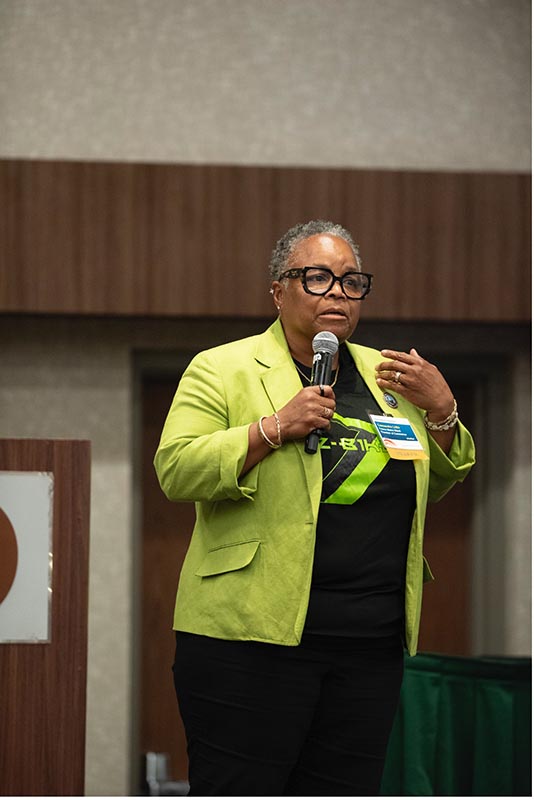
Dr. Casandra B. Little of the Fresno Metro Black Chamber of Commerce found a creative way to tell forum participants about her goal of cleaner skies through zero-emission transportation. She wrote a poem. “Imagine an air that feels like freedom,” one line in Dr. Little’s poem says.
Dr. Little noted that Fresno has some of the highest rates of childhood asthma in the country. She encouraged participants to find ways to help.
The chamber has started several clean transportation programs, including Biz-Bikes, an e-bike rental service for community members and students.
Examples of clean mobility programs funded by Cap-and-Invest include:
- In the farming community of Pajaro, the Latino Equity Advocacy & Policy Institute received funding from CMO for its Green Cruisers Program, which will provide electric bikes and tricycles for community use.
- In Stockton, the Stockton Unified School district received funding from CMIS to fully transition their district to zero-emission technologies such as electric school buses, chargers, and green lawn mowers.
- In San Diego, the City Heights Community Development Corporation received a Planning and Capacity Building grant through STEP to study and advance transportation justice in City Heights.
About California Climate Investments:
CMEA, CMO, CMIS, STEP, and PCB are part of California Climate Investments, a statewide initiative that puts billions of Cap-and-Invest, formerly known as Cap-and-Trade, dollars to work reducing greenhouse gas emissions, strengthening the economy, and improving public health and the environment — particularly in disadvantaged communities.